

Android Auto will be getting its biggest revamp yet

In-car infotainment systems have essentially become a crucial aspect of any modern car, up to the point where they even hold your vehicle settings, and are pretty essential to keeping a driver entertained and not lost with up-to-date and real-time navigation.
We’ve seen how Apple’s CarPlay Ultra essentially takes over the majority of the car’s screens and operating system, and it felt like Google’s Android Auto was essentially stale, but that just changed at Google’s I/O 2026 press conference, where, apart from major changes to Android and the new Google Book, Android Auto gets a massive overhaul.
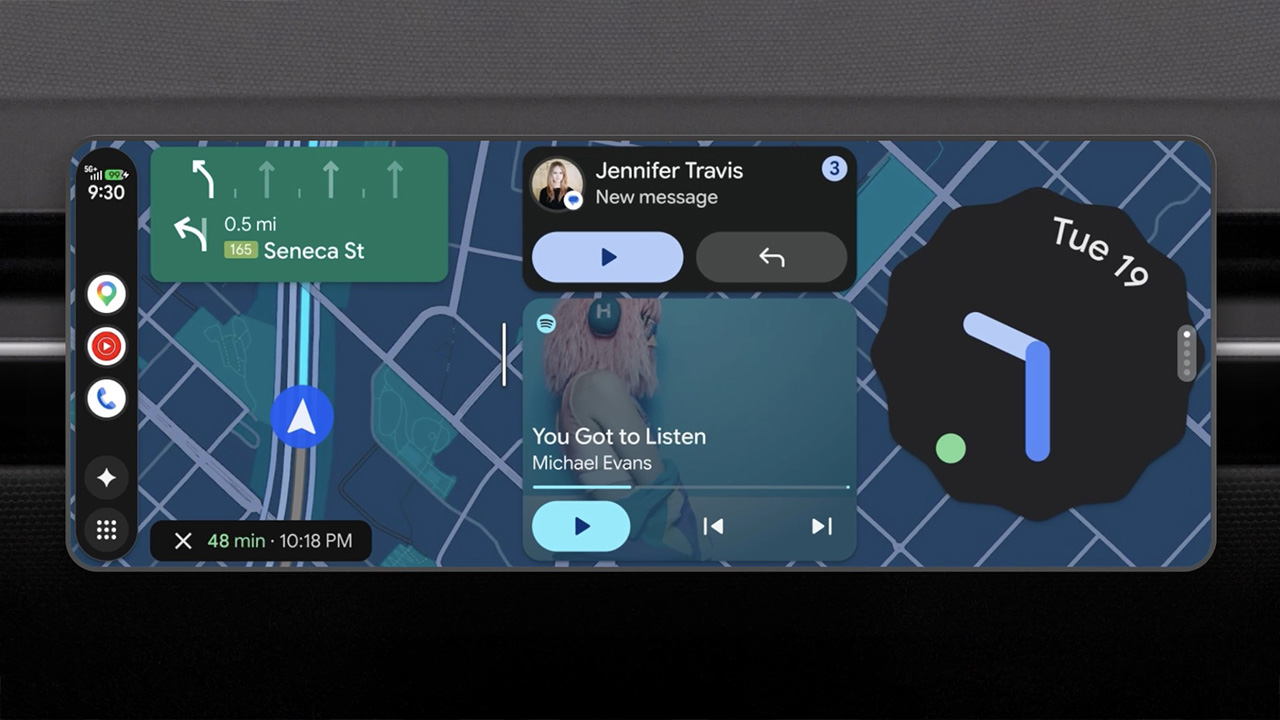

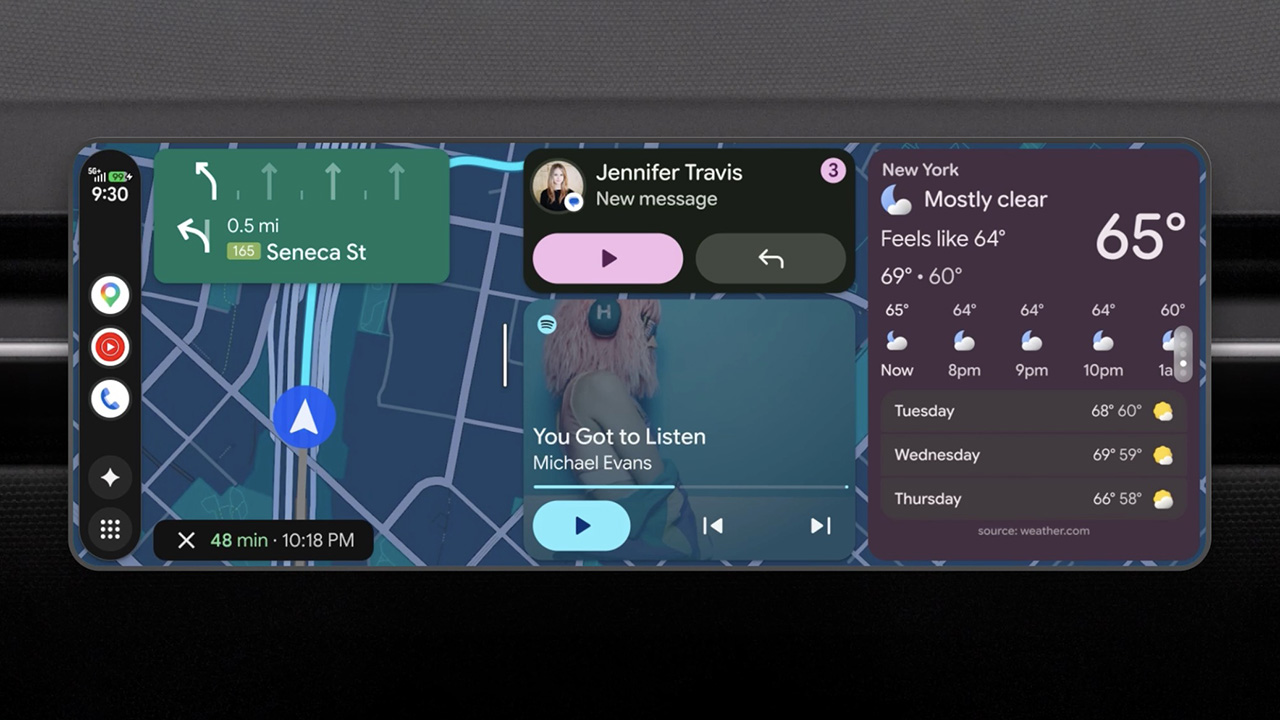
Noticeable right away is Android Auto’s new coat of paint thanks to the Material 3 Expressive Design, bringing new fonts, smooth animations, and a whole bunch of new customizations, including color schemes, widgets, and the center focus of the new update: Immersive Navigation.
Similar to what some Chinese automakers and BMW do with its iDrive, Google Maps now acts as Android Auto’s entire background, running below the widgets within Android Auto.


It also comes with a new 3D view that shows buildings, overpasses, and terrain changes, including specific lanes, traffic lights, and stop signs, to make navigation a lot easier. And if you drive an EV, Google Maps will also show you an estimate of how much battery you’ll have by the time you arrive at your destination.
Of course, this support depends on where you live, and if you decide to use Waze or other third-party navigation apps, Google hasn’t mentioned anything yet about how they will adapt.
One other big change is how Android Auto can also adapt to different screen shapes, so if you drive something like a Mini, a Neue Klasse BMW, or any other car with an unorthodox shape, you’ll see edge-to-edge Google Maps navigation in the background instead of Android Auto being confined to a small window.

While there have been hacky workarounds to enable video playback via Android Auto, Google is making it official, albeit for supported cars from brands like BMW, Ford, Genesis, Hyundai, Kia, Mahindra, Mercedes-Benz, Renault, Skoda, Tata, and Volvo.
In supported apps like YouTube, it will be able to play up to 1080p 60fps video while in Park, and when you shift to Drive, the video will seamlessly transition to audio-only in the background. Plus, there is also spatial audio support via Dolby Atmos, with YouTube Music and Spotify also getting visual revamps.


The Google Assistant has now been phased out for a more intelligent Gemini, and if your phone supports Gemini Intelligence (like a Google Pixel), the assistant will be able to understand the context from notifications, pull relevant data from your messages, emails, or calendar, and reply with said relevant information without you having to fumble through your phone. In the United States, you can also order food on the go so that your order is ready by the time you get home.

Finally, for those vehicles that run Google Built-In (like Honda and Volvo), it will get all of the same improvements as above, but Gemini will integrate deeper with the car, so you can ask the assistant specific questions for the car, like what the check engine light means or if your car’s cargo space will fit the luggage.


Specific cars will also have a more precise Immersive Navigation with Google Maps, where live lane guidance will work with a vehicle’s front-facing camera to tell you which lane to move to in-real time.
These changes will eventually roll out later this year. With sweeping updates such as these, the question remains: should automakers still continue developing their own software, or should they just leave it to the likes of Apple and Google with their excellent software suite?
Photos from Google


